
August 2004 - editor. Information on home construction in Pattaya, Thailand. How the house wall is constructed. Walls made from cement blocks. Application of stucco on the outside of the wall and what to watch out for. The stucco should be fairly thick as this is what give the wall its strength - this also being a place where 3rd party contractors will often cut corners. How to tell if stucco has been applied correctly.
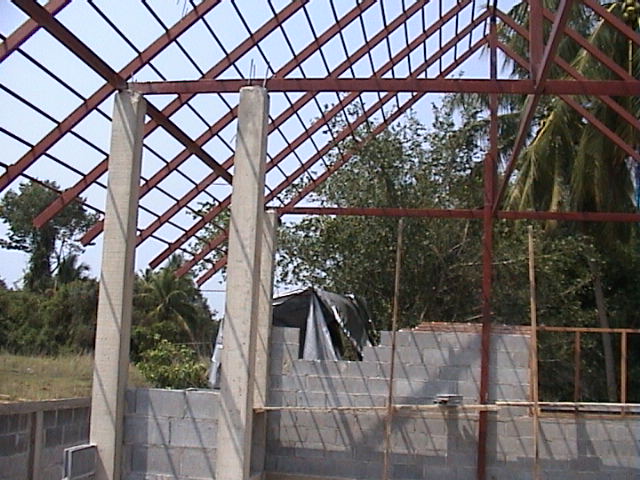
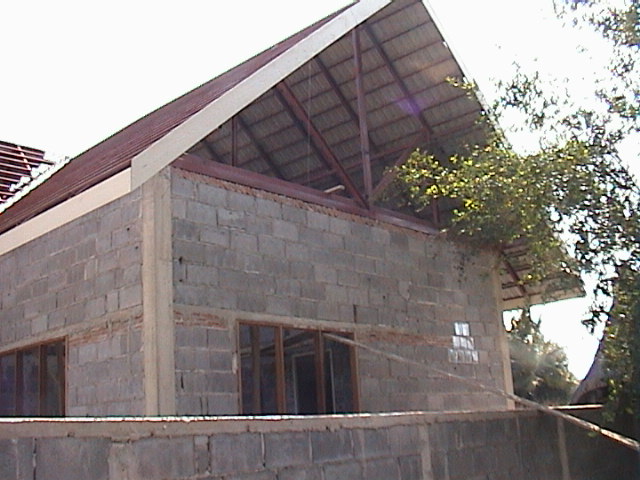
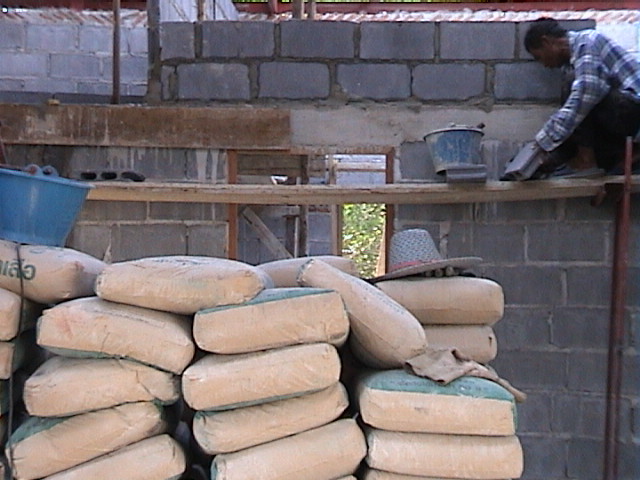
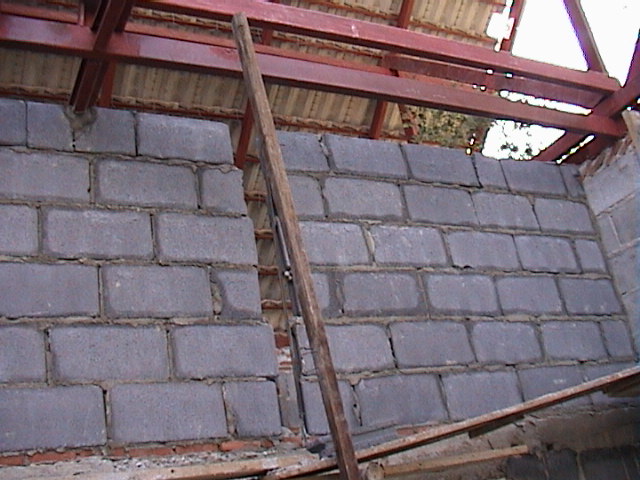
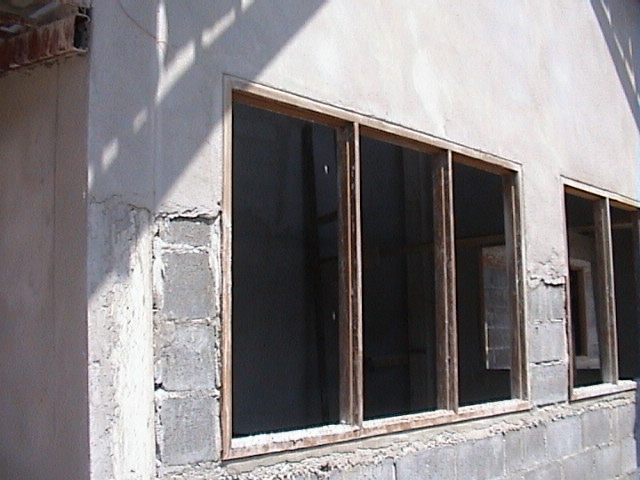
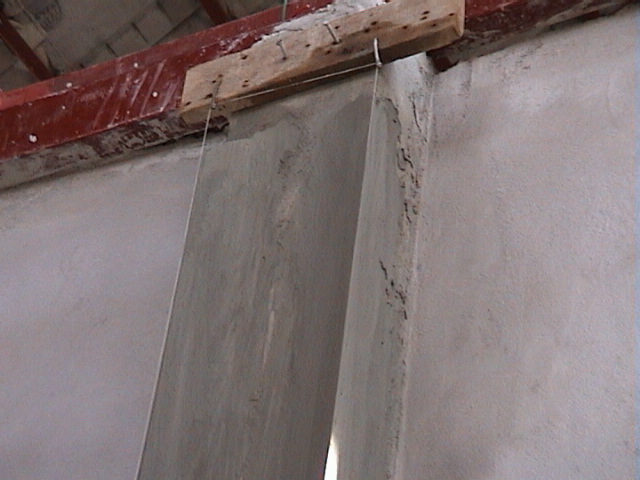
Concrete block walls are formed by stacking blocks in rows to form the wall. A string, normally clear nylon, is used as a 'straight-line' to aid in the row being laid down straight. Between the blocks (on all sides), cement is used to keep them in place and add strength. Rebar is used at the intersection with a foundation column to add strength. A hole is drilled in the foundation post and the rebar strand, about 30 centimeters in length, is inserted in the hole. It is then laid on top of a row of blocks and cemented in place.
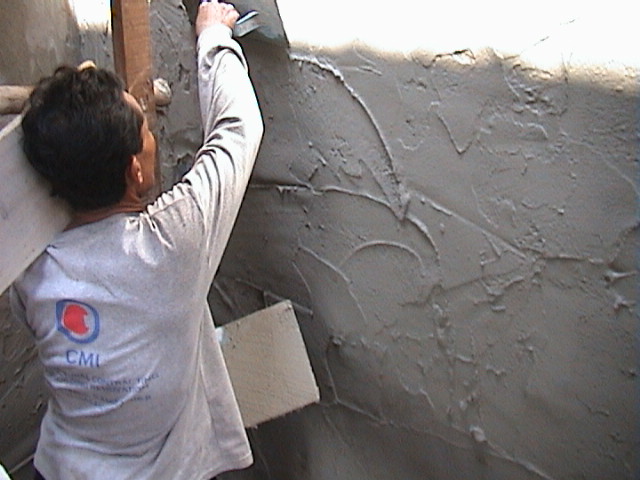
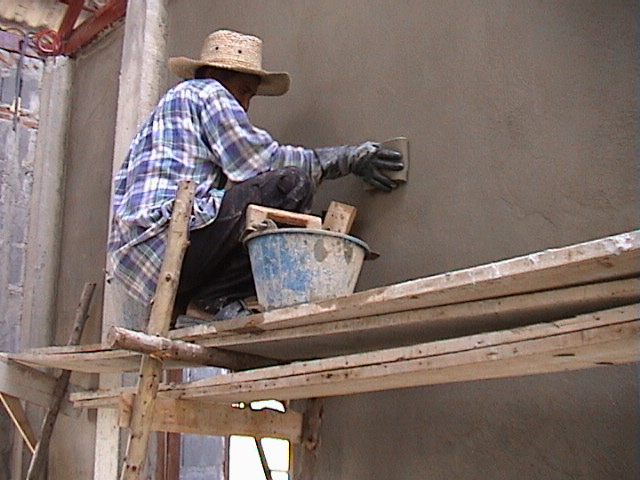
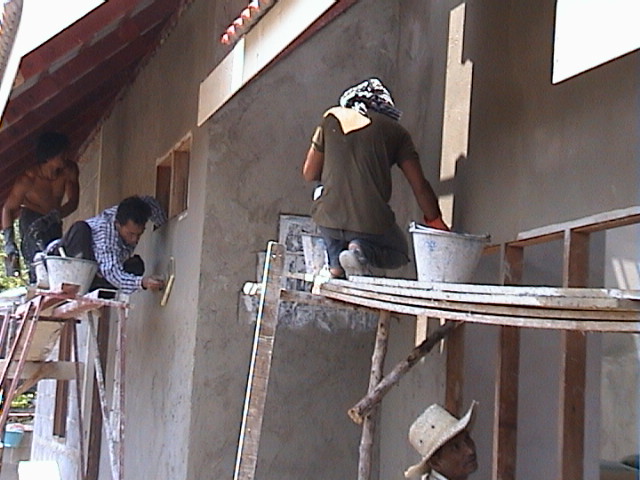
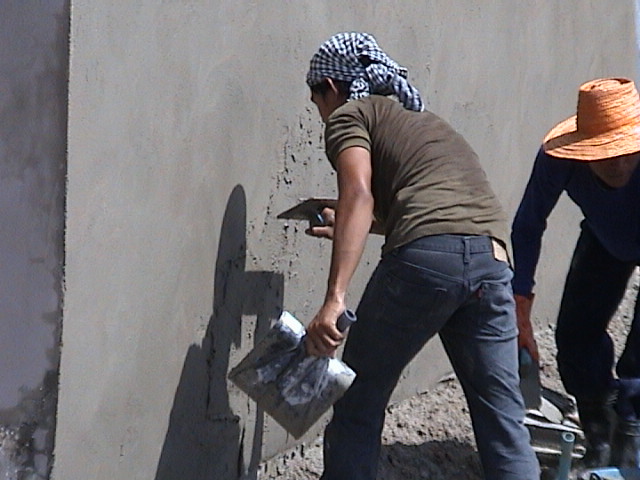
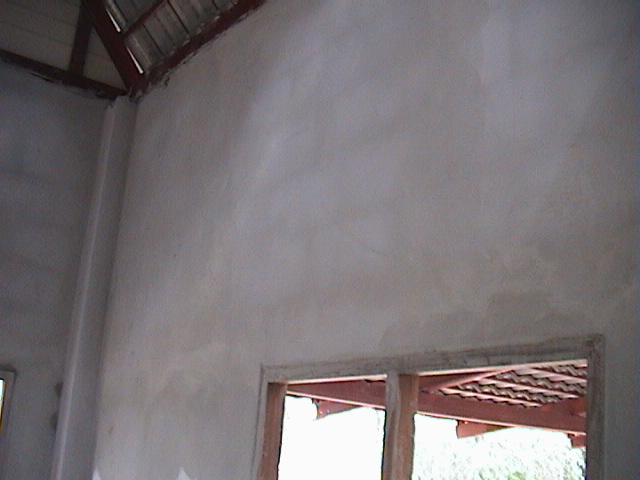
The 'chap' or stucco layer is applied next. The cement for this stage is mixed with less sand than for other applications. In the following example we used a thick coat of about 1 centimeter in depth. The 'chap' is what gives walls the real strength. A good job can be determined by examining the wall after the chap is applied and allowed to dry. If done poorly, small cracks will appear on the surface. When painted these cracks disappear and can't be detected.
A example of a house wall being constructed:
Feedback plea This site is free, but needs your comments and corrections to make it a valuable resource. If you've got comments, corrections or other information please leave feedback here.

home |
info home |
architecture |
basicmaterials |
bathroom |
ceiling |
concretepour |
electric |
eves |
foundationcolumn |
gate |
generalinfo |
goodideas |
gutter |
kitchen |
perimeterwall |
planterbox |
roof |
tile |
wall |
water |
windowdoor
This page was last updated October 2nd, 2009