coolthaihouse.com
-> info -> bathroomsAugust
15, 2004 - editor. Pattaya, Thailand home building and
construction. Information on building bathrooms, what
materials to use and some sample layouts. Information
and pictures of hot water heaters, plumbing, plumbing
supplies, shower heads and water tanks. Septic tanks
and how they are constructed. Shower stall (shower
enclosure) installation.
One of the things I really got out of the cool thai house prototype is
that the bathroom really has to be well laid out prior to starting
construction. The plan (or house blueprint) will include some of
the bathroom layout, but it is meant to be an overall guide and not
exact. You can't really lay out the bathroom until you decide on all of the things which
will go in there and have measurements for everything, including
toilets, bathtubs, shower enclosures, and sinks. This same thing
applies to everywhere in the house where cabinets and fixtures are going
to be installed, but is especially true in the bathroom.
The first thing to decide is: Will each shower
will have an individual hot water heater, will there be a central water heater.
A central water heating unit isn't all that much more expensive than a
good individual shower unit, but there are a lot of added expenses in
plumbing it in and in additional hardware. The plumbing for the
hot water should be copper, although there is also the option of using heavy metal pipe. The problem is
this: it will probably rust out after about 10 years and as it is
encased in cement, this isn't a very good option.
You could design it so the copper plumbing runs above ground, but this
isn't the way it is normally done. It seems that there are a lot
of people that deal with hot water plumbing who are really expensive, to
the point of being in the rip-off category. One copper plumber
came to bid on doing the bathroom and related plumbing for the cool thai house and
he wanted 10 times what the job
eventually went for. Another thing which drives up costs is that hot and cold faucets are much more
expensive than normal cold water ones. The bottom line here is
that central hot water is nice but needs to be budgeted accordingly.
Since the bathroom and plumbing is one of
the more expensive parts of the house, professional developers often try
to cut corners. What comes to mind are plastic bathtubs with poor
quality drain kits and no 'p-trap'. Plumbing in a bathtub is a lot
of work and it isn't an easy thing to get at the under the bathtub
plumbing once the tub is enclosed.
To save say 5000 Baht by using poor a poor quality bathtub and
accessories isn't worth it. A better option than a plastic bathtub
is either a good acrylic bathtub or no bathtub at all.
Septics are another area to keep an eye on.
It is so cost effective to add a couple of drainage rings at the onset
of building that it is almost always better to be safe than sorry.
The normal depth is 4 drainage rings, 5 or more is probably better.
Septics are normally pretty trouble free, but I've had past experiences
of the water not seeping into the soil because of hardness of the soil.
There are companies that will bring a truck and pump out your septic for
you, but this should only be required rarely.
Shower enclosures are gaining in
popularity, and there are a lot of models on display at Homepro.
They range in price from about 8000 Baht all the way up to 100,000 or
more. A good quality one of tempered glass can be purchased for
about 10000 Baht. I can't see any advantage to buying the acrylic
drain panel, which is an option, as a concrete and tile base seems to be
very sturdy and works great. If you purchase one an Homepro you
can contract with them there for the labor, which is a good idea if you
plumber hasn't done one before. This may well be the case (your
plumber not having ever installed a shower stall before), since these
only started becoming popular recently.
Lastly, sink enclosures. You can
purchase sinks that come with a base, or a sink that is to be mounted in a
enclosure. The enclosure idea seems to be a good one as it looks
pretty good, is durable and cheap. Materials include cement, red
bricks, tile, a door made or waterproof material and of course the sink
itself. The most expensive part of doing it this way will be the
door itself, which will cost upwards of 1000 Baht.
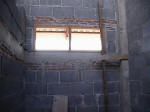
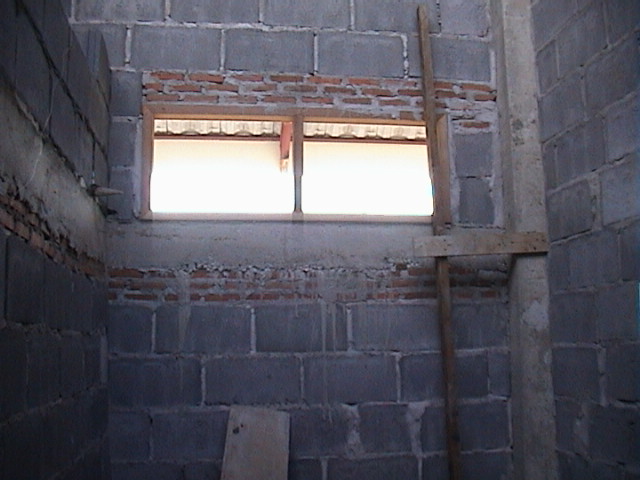
Bathrooms
will normally have windows set up at a height of 2.5 meters, like shown here.
(28-Mar-04)
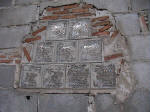
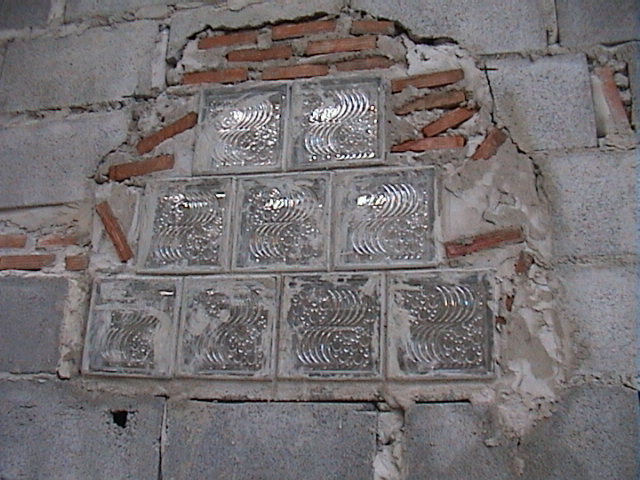
To
allow extra light into the bathroom I like the idea of
supplementing with glass blocks. They are inexpensive and
when finished look really nice. (09-Apr-04)
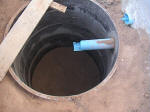
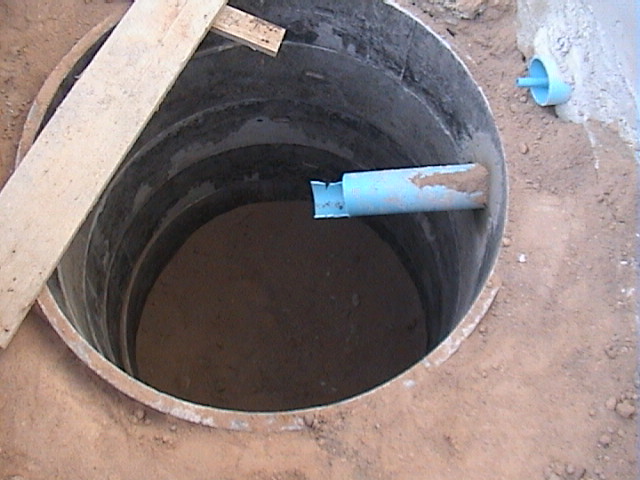
A
septic here is nothing but a hole in the ground with some cement rings
inserted. The normal number of rings is 4, I would recommend using
at least 5. The cement rings come in 1, 1.2 and 1.5 meter
diameters, the one show here are the 1.2 meter size. (08-Apr-04)

This
shot shows the correct way of laying down a
foundation base for bathroom, in that the floor
of the bathroom typically is 10 centimeters
lower than the rest of the house. Notice
how the foundation base in this shot is lower
for the bathroom than the main house.
(12-May-04)

The
frame for a PVC bathroom doors are themselves made of
PVC, and as such they need a support housing when they
are being set-up, otherwise the weight of cement above
the door will cause the frame to bend. (15-May-04)

This
shows the simplicity of the plumbing. Each
bathroom is serviced by two septics, one for
solid waste and one for water runoff.
Normally there will be three runoff pipe per
bathroom as follows; shower, sink and a runoff for the
floor drain. The pipes are run into the
septic and then cemented in place.
(01-Jun-04)

For
hot water plumbing this is the recommended way of doing
it: copper pipe shielded with PVC tubing. It isn't
that easy to find copper pipe or copper workman here.
(02-Jun-04)

Sink plumbing. This sink is fed by 1/2 inch hot
and cold pipes coming in and there is a drainage exhaust
going out. The pvc pipes will later be cemented into the wall.

This
shows hot and cold PVC pipes which are to be poured in
cement on the back of the house. (07-Jun-04)

This
shot shows a cement pour in progress which will
encase the hot and cold water plumbing in
cement. Also, the septics will be covered
in concrete with a 4" PVC pipe for venting.

The
plumber is here making a base for the shower
enclosures. You can also buy a acrylic
base but it isn't necessary. A cement
tiled base like this works great.
(19-Jun-04)

This
is an example of a 75 liter wall mount water
heater. There are many different sizes and
brands of central water heaters, one like this
costs about 10,000 Baht. However these
haven't really caught on yet (the normal type
used is the individual shower water heater) so
you will need to hunt to find someone to install
it and do the hot water plumbing correctly.
Also, using a central hot water heater like this
raises costs more than you would think, from
copper pipe to hot/cold faucets, the cost really
isn't in the unit itself but all of the
associated plumbing. This is a good
decision to make before you start building the
house, ie. central hot water or individual hot
water heaters? (21-Jun-04)

An
example of a hand done bathroom cabinet.
These can be done inexpensively and a real
sturdy. The cabinet is made of red brick
with a door made of waterproof material.

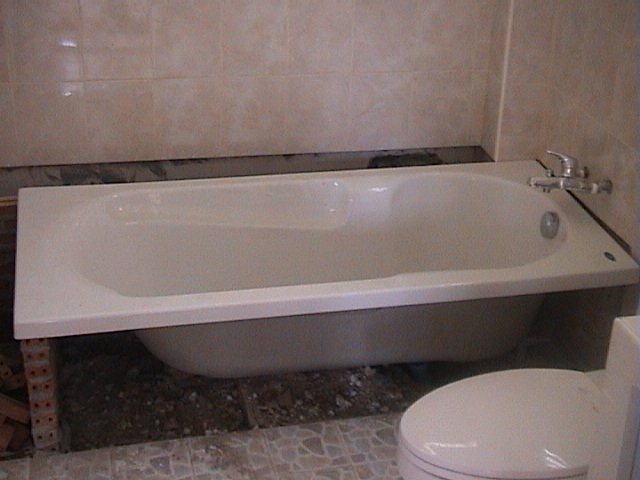
This
is the start of a support or a bathtub. The tub will be
supported by 4 rows of red brick.

A
bathroom sink enclosure being tiled. (22-Jun-04)

If
you go with hot water throughout the cost of the faucets
increases by about 3 fold. A faucet like this is
around 2000 Baht. (23-Jun-04)

The
lower part of this picture shows the free drainage
hardware that came with the acrylic bathtub.
The top is a heavy duty copper set with costs about 1500 Baht. Using the low quality free drain kit
wouldn't be worth it since it is a lot of trouble to
later fix a plumbed in bathtub.

Each
bathroom will have a floor drain something like
the one shown here. The plumber should
slightly angle the floor so water runoff will flow to the
drain.

A
plumbed in shower enclosure. These are just
starting to become popular. Acrylic ones can be
purchased for around 8000 Baht, but one with safety
glass will cost more than 10,000.

Bathroom
doors are normally made of a waterproof plastic
material like this one.

A
critical piece of hardware which should be installed
under the bathtub. It prevents foul odors from
entering through the drainpipe. A plumber may or may not suggest using
one, therefore you might want to buy one and request
that he install it. (24-Jun-04)

A
view of a finished hand made sink enclosure.
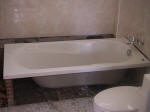
A
bathtub in the process of being framed. It will be
supported by 4 rows of red brick. (25-Jun-04)

A
terrible way to do septics. Here one hole
is being dug which will house a series of
septics. (02-Jul-04)

The
problem with doing septics this way is that the
materials will cross flow between septics. Also
the dirt pack will be tighter if each hole is dug
individually.
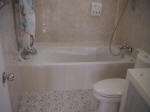
With
all of the work installing and plumbing in a
bathtub, it would be a shame to start with a low
quality plastic tub. A good bathtub can be
had for about 7000 Baht, where a plastic one
costs just over 2000 Baht. (06-Jul-04)

Preparation
for a septic cover. (08-Jul-04)

One
example of a nice looking septic cover.
Some varieties are vented, with this type the septic must
be separately vented. (09-Jul-04)

This
shows the septic being vented out the to the rear away
from the house. If it is the solid septic, PVC is
sometimes used (as shown here) to direct the exhaust air
out and away from the house.
(21-Aug-04)

For
a sink comparison, here is a pedistal model that
comes with the base included. (28-Mar-04)

Feedback plea This site is free, but needs your comments and corrections to make it a valuable resource. If you've got comments, corrections or other information please leave feedback here.
home |
info home |
architecture |
basicmaterials |
bathroom |
ceiling |
concretepour |
electric |
eves |
foundationcolumn |
gate |
generalinfo |
goodideas |
gutter |
kitchen |
perimeterwall |
planterbox |
roof |
tile |
wall |
water |
windowdoor
This page was last updated
October 2nd, 2009